


Daikokuten Wood Statue — Hand Carved Japanese God of Wealth
Daikokuten Wood Statue — Hand Carved Japanese God of Wealth
A handcrafted Buddha statue designed to bring peace, balance, and timeless beauty into your home.
- Hand-carved wood look with organic detail
- Calming spiritual decor for any mindful space
- Ideal for living rooms, meditation spaces, or gifting
- Crafted with care by skilled artisans
Couldn't load pickup availability
Product Description
Product Description
🌿 MEANING & SYMBOLISM
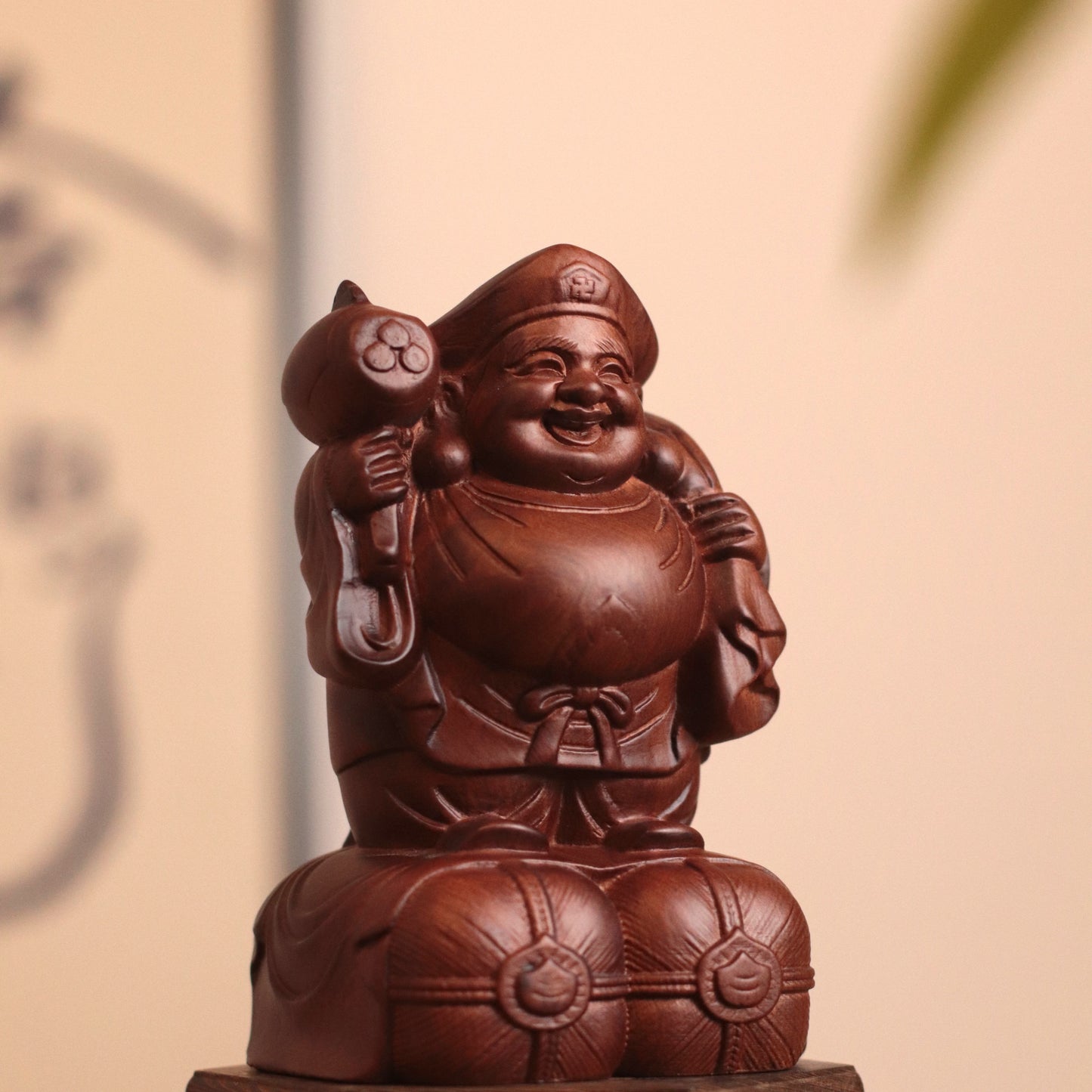
Daikokuten is one of Japan's Seven Lucky Gods — Shichifukujin — and the traditional protector of the kitchen and home. He is not simply a deity of money. His three iconic attributes encode something far more enduring: the Uchide no Kozuchi (the magic mallet) represents the power of intentional action — the idea that abundance is made, not waited for. The Nunobukuro (his sack) holds not just treasure, but wisdom and patience. And the Kome Dawara — the rice bales beneath his feet — are a reminder that true wealth begins with daily nourishment, with the table set, with the kitchen alive.
What makes this particular figure so disarming is his smile. Not the polite, composed expression of a distant deity — but the full, unguarded joy of someone who has already found what he was looking for. For the modern home, he becomes something quietly powerful: a daily reminder that enough is already here.
🌿 THE CRAFT & THE WOOD
What Makes This Statue Different from Mass-Produced Figures?
This statue is entirely hand-chiseled — every fold of the robe, every curve of the mallet, every crease of that joyful smile — cut by Master Carvers from Thường Tín, Hanoi, a district whose woodcarving lineage stretches back over a millennium. No CNC machines. No molds. No two pieces identical.
The wood is solid African Padauk — one of the densest hardwoods available, chosen not for convenience but for permanence. When you hold this piece, the weight tells you immediately: this is not hollow, not veneered, not composite. It is a single block of living wood, shaped by hand into something that will outlast trends, renovations, and decades.
Where to Place Daikokuten in Your Home:
The kitchen is the most natural home for this figure — Daikokuten is the traditional guardian of the hearth. A small shelf or counter altar works beautifully, especially with the Hexagon Base to elevate him slightly. For a home office, the desk facing the door is the classic placement. One place to avoid: directly beside a sink or refrigerator, where Water-element energy is traditionally believed to counteract his Earth and Fire attributes.
🎁 GIFTING ANGLE
This is the gift for someone who already has everything — but not yet this: one corner of their home that knows how to be still.
- For a housewarming, it arrives before the furniture is arranged and the routines are set — at exactly the right moment to place an intention. For a business milestone, it says something no card can: that real prosperity is built with patience, not speed. For a parent, a partner, a friend who has spent years creating warmth for everyone else — it offers a small, solid, lasting thing that asks nothing in return.
-
Embracing the Nonna Holiday spirit this season? Daikokuten has guarded kitchen hearths across Japan for centuries. There is something quietly right about bringing that tradition into a modern home — not as decoration, but as a presence.
Dimensions
Dimensions
FAQs
FAQs
✦ The kitchen is the most traditional placement — Daikokuten is the historical guardian of the hearth and household nourishment. A small shelf or counter altar, slightly elevated, works beautifully. For a home office, place him facing the door (the Command Position in classical Feng Shui), traditionally believed to create awareness of incoming opportunities. One place to avoid: directly beside a sink or refrigerator, where Water-element energy is traditionally believed to counteract his Earth and Fire attributes.
❓ Why does Daikokuten hold a mallet and stand on rice bales?
✦ Each element encodes a specific meaning. The Uchide no Kozuchi — the magic mallet — represents intentional action: the belief that abundance is created, not simply received. The Nunobukuro (his sack) holds wealth, wisdom, and patience — the three pillars of lasting prosperity. The Kome Dawara, the rice bales beneath his feet, symbolize the foundation of daily sustenance. In Edo-period Japan, rice was both food and currency — so standing on rice bales meant standing on financial security itself.
❓ Will the color of the Padauk wood change over time?
✦ Yes — and this is one of its most valued qualities. Freshly carved, African Padauk displays a vivid orange-red or vermillion. Over months and years of natural oxidation, it matures into a deeper burgundy or rich purple-brown tone. This is not fading — it is the wood aging, exactly as solid hardwood should. For Dark Japandi interiors especially, the aged Padauk tone becomes even more fitting over time. Each piece will develop its own patina based on its environment — no two will age identically.
❓ How is this different from a resin or ceramic Daikokuten statue?
✦ Solid wood has a weight and warmth that cast materials cannot replicate. When you hold this piece, the density of the Padauk — one of the hardest hardwoods available — is immediately apparent. Beyond feel, solid wood is a living material: it responds subtly to humidity, develops a patina, and carries the physical record of the carver's hand in every surface variation. A resin cast is identical to every other from the same mold. This piece is not identical to any other.
❓ Is this statue appropriate for non-Buddhist homes?
✦ Entirely. Daikokuten has long transcended strictly religious practice — in contemporary homes across the US, Europe, and Australia, he functions as a symbol of mindful abundance and daily gratitude. Many owners who have no connection to Buddhist or Shinto traditions place him in their kitchen or office simply as a grounding presence — a visual reminder to appreciate what is already here. His smile works regardless of tradition.
Free World Wide Shipping
Free shipping on all orders
30-Day Returns
& Easy Exchanges
Secure Checkout
Safe & encrypted


You May Also Like


Create a Calm, Meaningful Home
Bring home pieces that inspire peace, presence, and beauty—every day. with handcrafted pieces you'll love